Article provided courtesy of Cookware Only – A Consumer Guide to Cookware
How to choose and buy cookware set for your home is not easy. The number of cookware brands seems to be growing every day and the range of pots and pans is enormous with materials varying from stainless steel, cast iron, aluminum and copper. Confusing the issue even more is the clad style cookware range which is cookware made up of two or more different metals.
So with all this in mind how do you eventually decide on the right type of cookware whilst keeping within your budget? The answer is to know exactly what you want before you buy. In a nutshell this means that you need to know enough about cookware to enable you to make an informed decision.
What should you look for when buying cookware?
There are certain things you need to consider when choosing cookware. These include:
Heat conductivity – Some metals are better heat conductors than others. For instance, copper is a particularly good heat conductor whereas stainless steel is not. What this means in terms of cookware is that the better the heat conductivity the better and the more evenly your food will cook. It also means that when you turn the heat up or down the copper cookware will react a lot quicker to the temperature change than stainless steel cookware.
Price – The amount you pay for your cookware will most likely be a determining factor in what you end up buying. The rule of thumb with cookware is to buy the best you can afford.
Durability– Some types of cookware will maintain their good looks and last longer than others. Stainless steel is considered to be one of the best in this respect.
Reactivity– Some metals react with certain foods. Aluminum for instance has a tendency to react with tomato and other acidic dishes. This means that your food can actually absorb some of the metal, so take care with your cookware choices and ensure that you are aware of the reactivity of each product.
Maintenance– If you would prefer to not to have to shine your cookware every night just to keep it looking good then you will need to consider the amount of maintenance required to keep it in tip-top shape. Copper and cast iron cookware generally require quite a bit of work to keep it looking pristine whilst stainless steel is normally a little easier to look after.
Most people don’t understand the makeup of cookware nor do they understand why some cookware materials are better than others. With this in mind let’s take a look at each type of cookware and the advantages and disadvantages of each:
Stainless Steel Cookware: Stainless steel would have to be the most common type of cookware materials. You will probably find it in most households.
Stainless steel is actually an alloy of metals including steel, carbon and chromium. The reason stainless steel is called ‘stainless’ is because of its ability to resist corrosion.
Stainless steel is an excellent choice for cookware BUT because of its inability to conduct heat well it is important that you choose stainless steel cookware that has an aluminum or copper core. Without it you will find that you will get hot spots on the cooking surface and foods will cook unevenly.
Advantages
Relatively inexpensive
Durable
Scratch resistant
Keeps it shiny look for a long time
Doesn’t react with foods
Warp resistant Disadvantages
Not a good conductor of heat.
Cast Iron Cookware:
Cast iron is a material that has been used to create cookware for hundreds of years.
Those that use cast iron cookware absolutely swear by it for its exceptional cooking ability. Nevertheless, cast iron cookware is not an easy to maintain product. It requires a little effort to keep it working the way it should.
It is extremely durable and it is not uncommon to find cast iron cookware that has been passed down through the generations.
Check out Linda Stradley’s article onCast-Iron Pots & Pans.
Advantages
Relatively inexpensive
Extremely durable
Good heat retention Disadvantages
Reacts with foods unless seasoned
High maintenance; requires regular seasoning
Is heavier than most other types of cookware
Can rust unless seasoned
To purchase cast-iron pots and pans, check out What’s Cooking America’s Cast-Iron Pots and Pans Store.
Aluminum Cookware
Aluminum is used in approximately 50% of all cookware manufactured today because of its excellent heat conduction.
Aluminum is a soft metal and can scratch and dent easily. It can also react with certain foods which is why it is generally sandwiched between other metals. You will often find stainless steel cookware with a layer of aluminum offering the benefits of both materials.
Aluminum is also often treated through a process known as anodization. This process places a layer of aluminum oxide onto the surface making it scratch resistant as well as ensuring that it doesn’t react with foods. Aluminum cookware is often finished with a nonstick coating to ensure food remains unburned.
Advantages
Excellent heat conduction Disadvantages
Reacts with acidic foods
Scratches and dents easily
Copper Cookware
Copper cookware is commonly used amongst professional chefs because of its excellent heat conduction. Copper cookware on its own is generally quite expensive so it is not often seen in many home kitchens.
Copper is also often found sandwiched between layers of other materials like stainless steel.
Copper cookware is the cookware of chefs and for good reason. It conducts heat extremely well which means it heats quickly and adjusts to changes in temperature just as quickly. This allows greater control over your cooking.
Advantages
Excellent heat conduction
Relatively expensive Disadvantages
Reacts with acidic foods
Requires regular polishing
Some final tips:
Think about what pieces of cookware you need before setting out to the shops. There is no point in buying a 20 piece set if you will only end up using a few pieces.
Buying a cookware set is usually a lot cheaper than buying piece by piece. But again if you are not going to use all the pieces then really consider if a set is worth the money.
Buy the best you can buy for your money.
And finally – Making the final decision:
Making the final decision on whether you want stainless steel, cast iron, copper or aluminium is really a personal decision based on how much time you spend cooking, your expertise in the kitchen and your budget.
For all round flexibility, usability, and price, stainless steel cookware would be at the top of the list. When you consider the advantages it beats the others hands down. However it does have one big drawback in that it doesn’t conduct heat well and if you are concerned about having evenly cooked foods then heat conduction is important.
The solution to this is clad cookware. This style of cookware is made up of multiple layers of different metals. So, when shopping, look for stainless steel cookware with a layer of copper or aluminium sandwiched in the base. Stainless steel cookware with a copper base is generally more expensive than cookware with an aluminium base, but it does have the advantage of better heat conduction.
Take your time when choosing cookware, buy the best product you can afford, and follow the manufacturers instructions on looking after your pots and pans and you will be rewarded with years of good service and an enjoyable cooking experience.
At the International BusinessAccelerator, I recently taught a workshop with my colleague, Peter Evans on choosing the right international market for your business to expand to. This is a big topic and an important one, because if you get your choice of market wrong, it can have serious implications for the success of your international venture. It could also have a negative impact on your domestic business if things go badly.
We covered a lot of material in the workshop and I thought I’d share five of the most important points with you.
Research is vital … and there are several kinds you can use
In pretty much all contexts, a good choice is an informed choice … and choosing an international market to expand to is no exception. So, do your research! You can conduct market research to select the best export markets using either primary or secondary data resources.
If you are doing primary market research, you’ll be collecting data directly from the foreign marketplace through interviews, surveys and other direct contact with representatives and potential buyers. One of the benefits of primary market research is that the information is tailored to your needs and provides answers to your specific questions. On the down side, collecting the data can be time-consuming and expensive.
With secondary market research, data are collected from various domestic or Internet sources, such as trade statistics for a country or market reports from a variety of sources. Working with secondary sources is less expensive but secondary data has limitations including material that may be out-of-date or too general. Nonetheless, secondary research is a valuable and relatively easy first step for you to take and may be the only one you need, depending on what channel to market you eventually choose.
If neither of these appeal, you can always hire a company like Dearin & Associates to do it for you.
There is more than one way to select a market
The process of choosing which international market to go to can be done in a number of way, including randomly, which is a method I strongly encourage you not to use. We looked at two methods in the workshop, the 3-step method and the negative list method.
To summarise, the 3-step method works on the principle of “screen, compare, select”. You start by surveying a large number of the available markets and choose up to ten to research. You develop a list of criteria and assess each market against those same criteria. Based on the results of that assessment, you then choose just two or three markets to research in depth, and end by selecting one.
The negative list takes the 3-step model and tips it on its head. Using this model, the focus is on ruling markets out from the get-go. Having chosen several markets to analyse, you then set to work to rule them out, based on a quick initial assessment that shouldn’t take more than hour per country. Once you’ve found some countries that will fit the bill, you then research two or three in depth, before selecting one.
My preference is to use the negative list for the initial assessment and then follow it up with a version of the 3-step method to get more depth of perspective.
Knowing whether you can make a profit is key
Whichever method you choose, knowing whether you can make a profit before you start the process of launching into the new country is key.
Peter gave a great example during the workshop of how he had wanted to sell his company’s food products in the UK because he loved the supermarkets there. He had invested time and money in travelling there from Australia multiple times, but when he did the calculations, he realised that although the dream was great, there was no way for him to make a profit selling into that market, because his costs were too high. Although he was disappointed not to be able to enter the UK market, Peter was also glad that he’d crunched the numbers before getting too far down the track, because it saved him time, money and much greater disappointment at a later time.
The size of the market for your product is relevant
Once you’ve established that you can make a profit in a particular market, it’s also very important to work out how many people in that country are likely to buy what you sell. If no-one is going to buy it, its irrelevant whether you can make a profit or not.
Sizing the market is a step you should do after you’ve worked out whether you can make a profit because even if you’ve discovered a huge market for your product in a particular country (e.g. the US), if you can’t sell at a profit, there is no point moving forward.
It’s not all about the numbers
I’ve spent several paragraphs talking about the importance of numbers, but there are a variety of other important factors to consider as well. Are there tariffs or other non-tariff barriers in the market you want to target, that will make it difficult or impossible for you to sell there? Do you have concerns about the political situation and risks that this might pose to your business? Are you worried that your product might be copied in the new country? Is the market close enough that if you have to travel there frequently you can do it without disrupting your domestic business and the rest of your life? Are you comfortable with the culture, the language, and the food in the new country?
Some of these factors may not seem that significant, but there is all part of the process of weighing the pros and cons of different international markets.
Cookware regulations exist to create a baseline quality measurement in the market . Consumers know when they buy a product that is compliant with European regulations or American standards, they are getting quality pots and pans that have been thoroughly tested for domestic use. These standards are helpful, but not identical, on either side of the Atlantic. Are you developing a new cookware products? Read our whitepaper about the main cookware safety standards you need to know
EUROPEAN REGULATIONS FOR COOKWARE PRODUCTS
The European regulation EN12983:1 set out the safety and performance standards of domestic cookware for use on top of a stove, cooker or hob . Here a summary of most crucial tests regarding handles for cookware in this EU standards:
Resistance to Burning: this test is performed to ensure that if a cookware handle is accidentally exposed to a direct flame source, it won’t melt, lose pieces and put the user or the surface at risk of burns or surface damage.
Heat Resistance Test: this test is performed to ensure that the cookware handle doesn’t crack or break under exposure to prolonged heat by inserting the handle into the oven at 150 ° C/302 ° F for an hour. F.B.M. tests articles at a higher temperatures to guarantee heat resistance.
Torque Resistance Test: the test involves the application of a torsion force on both sides of the handle, tightening the axis to ensure rotations don’t damage the fastening system.
Bending Strength Test: this test exposes the cookware handle to a force of 10 kg/22 lbs gradually released on the posterior part of the handle. The test stresses the resistance of the fixing system and the handle to ensure the user’s safety.
Fatigue Test: in this test the pot is filled in with an extra load and undergoes 15,000 cycles of up and down. The test wants to ensure that the cookware handle and its fixing system won’t have any permanent distortion or loosening since it stresses the cookware by overloading it with much more weight that what will be used in normal domestic cooking.
AMERICAN REGULATIONS FOR POTS AND PANS
In the U.S.A., The Cookware Manufacturers’ Association (CMA) is a trade organization that sets voluntary standards for the industry’s products. Manufacturers who adhere to CMA standards are encouraged to state this fact in advertising and promotional materials, as well as on product tags and labels.
The list of tests required by the CMA is pretty similar to the European ones, for example:
Flame Soften Testing can be compared with the Resistance to Burning Test in the EU standard. The concept is basically the same, except the US Flame Softening test requires the handle to be exposed to a flame for a double period with respect to the EU one.
Torque Resistance for Stick Handle Pans Test and Fatigue Tests are performed in the same way in Europe and USA.
On the contrary, the CMA standards requires a very strict and unique test:
Assembly Strength Test. This one is particularly challenging in its HOT procedure since it requires the cookware to be loaded and to resist in a heated oven at 350 °F. This challenging test puts stress on the mechanical properties of the pot during weight lifting phase. It can be considered the test that determines the main difference between the two regulations.
If you want to know more and have key details aboutcookware handlesand the main international regulations just contact us for more information.
The right kitchen cookware is the foundation for hassle-free cooking – follow these tips on how to pick what’s good for you.
Investing in good quality kitchen equipment is key to pleasant cooking experiences. You’d want to avoid incidents like sauce or rice sticking to the bottom of your saucepan, or soup that keeps bubbling over your pot. Fret not – read on for some handy tips on how to choose the perfect kitchen cookware for you!
When it comes to stocking your kitchen, from your major appliances to your smaller bits and pieces, there’s no denying that a solid collection of cookware is a must.
Top-quality cookware can come with a hefty price tag, but it’s an investment worth making, says Lisa Higginbottom, lead brand manager at Meyer Cookware Australia. “Your $10 pan might seem to do the job, but you would be surprised at how much better food tastes, and how much easier it is to cook and clean up afterwards, if you have great cookware.”Cookware Shopping List
1/6Credit: 123RF
Melissa Hansen, cookware buyer at Peter’s of Kensington, lists the basic pieces needed for most kitchens:
1x 16cm saucepan
1x 20cm saucepan with steamer insert to fit
1x 26cm/5-6L cast-iron casserole pot
1x 7L or 1x 9L stockpot
2x frypans (one large, one small)
1x 26cm cast-iron griddle
1x 32-36cm wok
COST
A decent, average-sized saucepan costs $70-$130.Saucepans With Style
2/6Credit: 123RF
Cookware has undergone a serious makeover in recent years. A quick browse of any department store will reveal a bevy of bold paintbox hues as well as the classic stainless steel, copper and cast-iron designs.Cooking Performance
3/6Credit: 123RFLooks aside, the right cookware needs to perform well.“It should be strong and durable, offer good heat retention, prevent hot spots, feature heatproof handles, work on all heating surfaces, be dishwasher safe, stackable, and have cooktop-to-oven capabilities,” says Jennene Plummer, food director at Are Media Food Studio.“Cookware is something you use daily and should last for years, so do your research and buy the best you can afford,” she adds.How To Choose?
4/6Credit: 123RFWhen it comes to choosing the right cookware for your kitchen, its easy to become overwhelmed by the sheer variety of options available.Here, Mark J Henry, the founder of Australian cookware designers, Solidteknics, shares the three most important things to consider when picking your new pans…
“It’s time to ditch the non-stick – nonstick, turns out, has some serious ‘sticking’ power. Whilst you might enjoy that slippery surface for a year or two, the synthetic chemicals commonly used in nonstick cookware have lingering and wide-reaching effects in our bodies and our environment. Look for a saucepan that is non-toxic, healthy and sustainable.”
“Looks aside, you want to be purchasing cookware that’s versatile. Choose a pan that can be used across all heat sources including induction, gas, electric, oven and fire, that also boasts a clever design. Our Solidteknics pans feature lids that can be used as skillets – which we added as just another versatile element!”
“When selecting a saucepan, you want to make sure you’re choosing quality. Look for a design that looks sturdy – make sure you check the joins between the handle and pan, as well as the pot lid.
Stainless Steel
Stainless steel, often featuring a thick aluminium or copper base, is very durable, suitable for all heat sources, metal-utensil safe and easy to clean, plus it won’t rust, chip or break. Quality 18/10 stainless-steel pans are expensive but last a lifetime.
Hard-Anodised Aluminium
Hard-anodised pans have a smooth, scratch-resistant surface that’s twice as hard as stainless steel. It’s durable and offers great heat conduction and retention – perfect for keeping rice warm. Cost-wise, they’re similar to stainless steel.
Non-Stick
Non-stick cookware is great for low-fat cooking, plus it’s affordable and easy to clean. On the downside, it scratches, won’t brown meat as well as metal, and some non-stick coatings contain perfluorooctanoic acids (PFOAs), which can accumulate to harmful levels. Consider PFOA-free non-stick cookware such as Scanpan’s Green Tek and the GreenPan range.
Cast-Iron
If you do a lot of slow cooking, cast-iron may be your best choice. Cast iron absorbs and retains heat, it’s tough, long-lasting, and suitable for all cooktop types. Enamel-coated styles are rust-resistant and easier to clean and maintain than traditional cast iron. Bear in mind, however, that cast iron is heavy and its traditional look might not be best suited contemporary kitchens.
Copper
If you want stunning, heirloom-quality pans and budget isn’t a concern, consider copper. “It’s one of the best conductors of heat, which is why it’s a favourite with chefs,” says David Ley, spokesperson for Copper Kitchen. “Heat spreads quickly and evenly throughout the pan, and cools quickly when the stove is turned down, giving unparalleled temperature control.”
Ferritic Non-Nickel Stainless Steel
One of the newer kids on the block, Ferritic non-Nickel Stainless Steel is non-toxic, low maintenance and thermally conductive, making it compatible with induction. Used in Solidteknics‘ nöni™ collection, the saucepans are perfect for all liquid boiling, slow cooking and acidic sauces. A great all-rounder perfect for the home kitchen and cooking outdoors.Care Guide
6/6Credit: 123RF
Suzanne Murphy, chief marketing executive at Meyer Cookware Australia, offers these tips for keeping cookware in great shape:
Read the care instructions and register the product with the manufacturer so you can easily claim on the warranty.
Check for dishwasher safety, oven-safe temperatures, and whether it’s alright to use metal utensils.
Avoid overheating. For non-stick pans, start on high for one to two minutes and then turn down to medium.
Never use knives or cut food in your cookware.
Wash your cookware thoroughly with a brush or non-stick cleaning pad after each use. It might seem that the food just wipes away from non-stick pans, but without a thorough cleaning, the oils and fats will build up and burn onto the surface over time.
To remove baked-on food, bring a little vinegar to the boil in the pan before washing.
Distinct economic entities all around the globe are experiencing fundamental changes in the way they produce and market various items in the form of products and services. It can be observed that national economies which have already accomplished the aim of self-sustainability are currently focusing on opening avenues for International Business. Some points attributing to this crucial change is the development of collaboration, innovation, communication, and business infrastructure.
Nations that are geographically far away from each other are now connecting with each other socially, and financially as well. The establishment of international trade and financial regulatory bodies such as the World Trade Organization and International Monetary Fund have facilitated the administration of processes of exchange and trade amongst nations various. This has helped amplify business relationships among these economic entities. Some of the eminent economic benefits of international business for any country are listed below:
Earn Foreign Exchange
International businesses export their goods and services all over the world due to these relaxed international trade policies. This helps these economic systems to earn valuable foreign exchange. Strong foreign exchange reserves allow countries to facilitate import and export. This foreign exchange is used to pay for imports. Foreign exchange helps businesses become more profitable and to strengthen the economic power of their country. Foreign exchange is essentially used to import commodities from the global market.
Diversify Business
One of the primary benefits of international business for strong economies reason is that these entities would like to amplify their spheres of commerce and acquire newer markets so that they increase their growth rates. It is also critical to consider the power and influence of pop culture. Developing countries are inspired by events and trends in the western world – which just opens paths for business and trade. It leads to specialisation. Certain countries are blessed technical expertise – for example, China, Japan, South Korea, and India when it comes to information technology and electronics, while Europe is home to the leading players in fashion and automobiles. Encouraging international business does not just boost the economy but exposes residents of a nation to global conforms and standards of living.
Spread Business Risks
In some unfortunate circumstances, some businesses may encounter lean periods in some distinct geographical locations. In this case, operating in another country can efficiently take this obstacle. It is easier to smoothen out bumps if a business has expanded its functions in multiple countries. If a business is unable to sell products in its home country due to inevitable circumstances, they do have the option to sell the same products in other countries where the demand could possibly be higher. No business wants to be in the situation of realizing that its main product or service has gone out of style. Having a presence in more than one country can help you to ride out the winds of trends, fashions and fads – a product or service that has become dated in one location may still be going strong in another, buying you time to rethink your approach. No business wants to be in a spot where its main product or service has gone out of style or demand. Maintaining a presence in more than one country can help these firms to ensure that a product or service that has become obsolete in one area may still be going popular in another, allowing executives to rethink your approach.
Optimum Utilization of Resources
Some countries have extensive deposits of metals, minerals, and fertile land for agricultural production. Prominent global business eye these markets to attain their resources. These emerging markets and developing countries may not have the adequate expertise, experience or resources needed to tap the deep reserves of these minerals and metals. Consequently, they eventually welcome giant multinationals with open arms as it provides them with royalties and other financial benefits to grow their economies.
It is easy to conclude that exploring forms of international business can accrue an array of benefits for both economic systems involved. It essentially ensures that there is no wastage of resources, standards of living are continuously elevated, while simultaneously boosting the economy. A top institute to pursue specialized management education in international business is UPES (MBA in International Business). The University of Petroleum and Energy Studies has cemented itself as one of the top institutes offering highly relevant and contemporary education, pertaining to the functionality of the international market today.
A business plan is more than a document. It’s a guide that helps you outline and achieve your goals. It’s also a management tool that allows you to analyze results, make strategic decisions, and showcase how your business will operate, and grow. In short, if you’re thinking of starting a business or plan to pitch your business to investors, writing a business plan can improve your chances of success.
Writing a business plan doesn’t have to be complicated. In this comprehensive guide, I’ll show you how to quickly and easily write a business plan that will get the results you want. Don’t worry, you don’t have to have a business or accounting degree to put together a great business plan. This guide will show you how to get your plan done step-by-step without any of the complexity or frustration.
Are you still unsure whether a business plan is worth the time and investment? Can’t you just jump right into starting and running your business? You could, but you’ll be missing out on some key benefits that a business plan provides. Having a business plan will help you in the following ways.
Grow your business faster
Writing a business plan is about establishing a foundation for your business. You’re not predicting the future, you’re working through the core strategy of your business that will help you grow. This initial document isn’t meant to be perfect but is designed to be reviewed and adjusted to help you identify and reach your goals.
Without a business plan as a baseline, it will be far more difficult to track your progress, make adjustments, and have historical information readily available to reference when making difficult decisions. Creating a business plan ensures that you have a roadmap that doesn’t just outline where you plan to go, but where you’ve already been.
Pitch and get funding
Investors and loan providers need to know that you have a solid understanding of the trajectory of your business. You need to prove that there is an attainable and sustainable need for your solution, that you have a strong business strategy, and that your business can be financially stable. This means having the right financial statements, forecasts, and a digestible explanation of your business model available for potential investors.
Writing your business plan helps you put all of those pieces together and create connections between them to tell a cohesive story about your business.
Make confident strategic decisions
Often the biggest decisions you’ll make for your business are amidst volatile periods of growth, decline, or even external crises. This requires you to make highly consequential decisions far more quickly than you may like. Without up-to-date planning and forecast information, these decisions may be less certain or strategic than they need to be.
By having a written business plan that you’re regularly reviewing, you can make confident decisions. You’ll have all the information necessary to know when you can hire new employees, launch a new product line or make a major purchase. At the same time, you can also plan ahead in case a decision doesn’t work out as expected, minimizing your potential risk.
5 tips to write a great business plan quickly and easily
Before you get started with your business plan, let’s talk about some “rules” that will make the whole business planning process easier. The goal is to get your business plan done so you can focus on building your business.
1. Keep it short
Business plans should be short and concise. The reasoning for that is twofold:
First, you want your business plan to be read. No one is going to read a 100-page or even 40-page business plan. Sure, you may need supporting documentation for specific sections but you can include those elements in your Appendix.
Second, your business plan should be a tool you use to run and grow your business. Something you continue to use and refine over time. An excessively long business plan is a huge hassle to revise—you’re almost guaranteed that your plan will be relegated to a desk drawer, never to be seen again.
2. Know your audience
Write your plan using language that your audience will understand.
For example, if your company is developing a complex scientific process, but your prospective investors aren’t scientists, avoid jargon, or acronyms that won’t be familiar.
Instead of this:
“Our patent-pending technology is a one-connection add-on to existing bCPAP setups. When attached to a bCPAP setup, our product provides non-invasive dual pressure ventilation.”
Write this:
“Our patent-pending product is a no power, easy-to-use device that replaces traditional ventilator machines used in hospitals at 1/100th the cost.”
Accommodate your investors, and keep explanations of your product simple and direct, using terms that everyone can understand. You can always use the appendix of your plan to provide the full specs if needed.
3. Test your business idea
Working through your business plan, and starting with a one-page pitch, can help you test the viability of your business idea long before launching. As you work through everything from your branding and mission statement, to your opportunity and execution, the best thing you can do is get feedback and test different elements of your business. This can be as simple as having a mentor or partner review elements of your plan, or conducting market research and speaking directly to your potential customer base.
The more you test and review elements of your plan, the better your plan and business will be. This can save you from spending days developing a strategy that just isn’t feasible.
4. Establish goals and objectives
You should know what you want to get out of your business upfront. Are you wanting to turn a side hustle into a full-time business? Trying to expand your team or launch an additional location? Knowing what you’re trying to accomplish, and having questions like these in mind, can help you develop your business plan specifically to reach these goals.
Now, you may not have every milestone or even specific steps in mind to reach your goals before starting. But that’s the beauty of working through your business plan. It will help you define metrics of success, flesh out your goals and further develop elements of your business to meet specific objectives. You just need a vision or even aspirational goals to start with to better hone in on what’s important.
5. Don’t be intimidated
Did you know that the vast majority of business owners and entrepreneurs aren’t business experts? They don’t have MBAs or accounting degrees. They’re learning as they go and finding tools and resources to help them.
Writing a business plan may seem like a big hurdle, but it doesn’t have to be. You know your business—you’re the expert on it. For that reason alone, writing a business plan and then leveraging your plan for growth won’t be nearly as challenging as you think.
And you don’t have to start with the full, detailed business plan that I’m going to describe here. In fact, it can be much easier to start with a simple, one-page business plan—what we call a Lean Plan—and then come back and build a slightly longer, more detailed business plan later.
The rest of this article will dive into the specifics of what you should include in your business plan, what you should skip, the critical financial projections, and links to additional resources that can help jump-start your plan.
Key components of a business plan
Whether you’re building a business plan to raise money and grow your business or just need to figure out if your idea will work, every business plan needs to cover 6 essential sections. Here’s a quick overview of each section and to skip to a more detailed overview, click the links below.
1. Executive summary
The executive summary is an overview of your business and your plans. It comes first in your plan and is ideally only one to two pages. Most people write it last, though. Jump to this section.
2. Opportunity
The opportunity section answers these questions: What are you actually selling and how are you solving a problem (or “need”) for your market? Who is your target market and competition? Jump to this section.
3. Execution
In the execution chapter of your business plan, you’ll answer the question: how are you going to take your opportunity and turn it into a business? This section will cover your marketing and sales plan, operations, and your milestones and metrics for success. Jump to this section.
4. Company and management summary
Investors look for great teams in addition to great ideas. Use the company and management chapter to describe your current team and who you need to hire. You will also provide a quick overview of your legal structure, location, and history if you’re already up and running. Jump to this section.
5. Financial plan
Your business plan isn’t complete without a financial forecast. We’ll tell you what to include in your financial plan, but you’ll definitely want to start with a sales forecast, cash flow statement, income statement (also called profit and loss), and your balance sheet. Jump to this section.
6. Appendix
If you need more space for product images or additional information, use the appendix for those details. Jump to this section.
In the upcoming sections of this article, I’ll dive into the details of each section of your business plan and focus on building one that your investors and lenders will want to read.
If you’re looking for a downloadable business plan template to get you started, you can skip ahead and download it now. Or, if you just want to see what a completed business plan looks like, check out our library of over 500 free sample business plans.
Executive summary
The executive summary of your business plan introduces your company, explains what you do, and lays out what you’re looking for from your readers. Structurally, it is the first chapter of your business plan. And while it’s the first thing that people will read, I generally advise that you write it last.
Why? Because once you know the details of your business inside and out, you will be better prepared to write your executive summary. After all, this section is a summary of everything else you’re going to write about.
Ideally, the executive summary can act as a stand-alone document that covers the highlights of your detailed plan. In fact, it’s very common for investors to ask for only the executive summary when they are evaluating your business. If they like what they see in the executive summary, they’ll often follow up with a request for a complete plan, a pitch presentation, and more in-depth financials.
Because your executive summary is such a critical component of your business plan, you’ll want to make sure that it’s as clear and concise as possible. Cover the key highlights of your business, but don’t into too much detail. Ideally, your executive summary will be one to two pages at most, designed to be a quick read that sparks interest and makes your investors feel eager to hear more.
Business overview
At the top of the page, right under your business name, include a one-sentence overview of your business that sums up the essence of what you are doing.
This can be a tagline but is often more effective if the sentence describes what your company actually does. This is also known as your value proposition.
Problem
In one or two sentences, summarize the problem you are solving in the market. Every business is solving a problem for its customers and filling a need in the market.
Solution
This is your product or service. How are you addressing the problem you have identified in the market?
Target market
Who is your target market, or your ideal customer? How many of them are there? It’s important here to be specific.
If you’re a shoe company, you aren’t targeting “everyone” just because everyone has feet. You’re most likely targeting a specific market segment such as “style-conscious men” or “runners.” This will make it much easier for you to target your marketing and sales efforts and attract the kinds of customers that are most likely to buy from you.
Competition
How is your target market solving their problem today? Are there alternatives or substitutes in the market?
Provide a brief overview of your team and a short explanation of why you and your team are the right people to take your idea to market.
Investors put an enormous amount of weight on the team—even more than on the idea—because even a great idea needs great execution in order to become a reality.
Financial summary
Highlight the key aspects of your financial plan, ideally with a chart that shows your planned sales, expenses, and profitability.
If your business model (i.e., how you make money) needs additional explanation, this is where you would do it.
Funding requirements
If you are writing a business plan to get a bank loan or because you’re asking angel investors or venture capitalists for funding, you must include the details of what you need in the executive summary.
Don’t bother to include terms of a potential investment, as that will always be negotiated later. Instead, just include a short statement indicating how much money you need to raise.
Milestones and traction
The last key element of an executive summary that investors will want to see is the progress that you’ve made so far and future milestones that you intend to hit. If you can show that your potential customers are already interested in—or perhaps already buying—your product or service, this is great to highlight.
You can skip the executive summary (or greatly reduce it in scope) if you are writing an internal business plan that’s purely a strategic guide for your company. In that case, you can dispense with details about the management team, funding requirements, and traction, and instead treat the executive summary as an overview of the strategic direction of the company, to ensure that all team members are on the same page.
Key questions to answer with your executive summary
The purpose of your executive summary is to provide an easily digestible overview of your business. To help you develop this section, try to answer the following questions.
What are your business objectives?
What is your target market and how will you position yourself?
Who are the key players on your team?
What are your expectations for growth and how will you achieve it?
What are your funding requirements?
Opportunity
There are four main chapters in a business plan—opportunity, execution, company overview, and financial plan. The opportunity chapter of your business plan is where the real meat of your plan lives—it includes information about the problem that you’re solving, your solution, who you plan to sell to, and how your product or service fits into the existing competitive landscape.
You’ll also use this section of your business plan to demonstrate what sets your solution apart from others, and how you plan to expand your offerings in the future.
People who read your business plan will already know a little bit about your business because they read your executive summary. But this chapter is still hugely important because it’s where you expand on your initial overview, providing more details and answering additional questions that you won’t cover in the executive summary.
Problem and solution
Start the opportunity chapter by describing the problem that you are solving for your customers. What is the primary pain point for them? How are they solving their problems today? Maybe the existing solutions to your customer’s problem are very expensive or cumbersome. For a business with a physical location, perhaps there aren’t any existing solutions within reasonable driving distance.
Defining the problem you are solving for your customers is by far the most critical element of your business plan and crucial for your business success. If you can’t pinpoint a problem that your potential customers have, then you might not have a viable business concept.
To ensure that you are solving a real problem for your potential customers, a great step in the business planning process is to get away from your computer and actually go out and talk to potential customers. Validate that they have the problem you assume they have, and then take the next step and pitch your potential solution to their problem. Is it a good fit for them?
Once you have described your target market’s problem, the next section of your business plan should describe your solution. Your solution is the product or service that you plan on offering to your customers. What is it and how is it offered? How exactly does it solve the problem that your customers have?
For some products and services, you might want to describe use cases or tell a story about a real user who will benefit from (and be willing to pay for) your solution.
Target market
Now that you have detailed your problem and solution in your business plan, it’s time to turn your focus toward your target market: Who are you selling to?
Depending on the type of business you are starting and the type of plan you are writing, you may not need to go into too much detail here. No matter what, you need to know who your customer is and have a rough estimate of how many of them there are. If there aren’t enough customers for your product or service, that could be a warning sign.
Market analysis and market research
If you are going to do a market analysis, start with some research. First, identify your market segments and determine how big each segment is. A market segment is a group of people (or other businesses) that you could potentially sell to.
Don’t fall into the trap, though, of defining the market as “everyone.” A classic example is a shoe company. While it would be tempting for a shoe company to say that their target market is everyone who has feet, realistically they need to target a specific segment of the market in order to be successful. Perhaps they need to target athletes or business people who need formal shoes for work, or perhaps they are targeting children and their families. Learn more about target marketing in this article.
TAM, SAM, and SOM
A good business plan will identify the target market segments and then provide some data to indicate how fast each segment is growing. When identifying target markets, a classic method is to use the TAM, SAM, and SOM breakdown to look at market sizes from a top-down approach as well as a bottom-up approach.
Here are some quick definitions:
TAM: Your Total Available or Addressable Market (everyone you wish to reach with your product)
SAM: Your Segmented Addressable Market or Served Available Market (the portion of TAM you will target)
SOM: Your Share Of the Market (the subset of your SAM that you will realistically reach—particularly in the first few years of your business)
Once you have identified your key market segments, you should discuss the trends for these markets. Are they growing or shrinking? Talk about the market’s evolving needs, tastes, or other upcoming changes to the market.
Your ideal customer
When you have your target market segments defined, it’s time to define your ideal customer for each segment.
One way to talk about your ideal customer in your plan is to use your “buyer persona” or “user persona.” A buyer persona is a fictitious representation of your market—they get a name, gender, income level, likes, dislikes, and so on.
While this may seem like additional work on top of the market segmentation that you have already done, having a solid buyer persona will be an extremely useful tool to help you identify the marketing and sales tactics you’ll need to use to attract these ideal customers.
Key customers
The final section of your target market chapter should discuss key customers.
This section is really only required for enterprise (large) companies that have very few customers. Most small businesses and typical startups can skip this and move on.
But if you are selling to other businesses (B2B), you may have a few key customers that are critical to the success of your business, or a handful of important customers that are trend leaders in your space. If so, use this final portion of your target market chapter to provide details about those customers and how they are important to your business’s success.
Competition
Immediately following your target market section, you should describe your competition. Who else is providing solutions to try and solve your customers’ pain points? What are your competitive advantages over the competition?
Most business plans include market research and compare their features against their competition using a SWOT analysis. The most important thing to illustrate in this section of your business plan is how your solution is different or better than other offerings that a potential customer might consider. Investors will want to know what advantages you have over the competition and how you plan on differentiating yourself.
One of the biggest mistakes entrepreneurs make in their business plans is stating that they don’t have any competition.
The simple fact is that all businesses have competition. Competitors may not always come in the form of “direct competition,” which is when you have a competitor offering a similar solution to your offering. Oftentimes, you may be dealing with “indirect competition,” which is when consumers solve their problem with an entirely different kind of solution.
For example, when Henry Ford was first marketing his cars, there was very little direct competition from other car manufacturers—there weren’t any other cars. Instead, Ford was competing against other modes of transportation—horses, bikes, trains, and walking. On the surface, none of these things look like real direct competition, but they were how people were solving their transportation problems at that time.
Future products and services
All entrepreneurs have a vision of where they want to take the business in the future if they are successful.
While it’s tempting to spend a lot of time exploring future opportunities for new products and services, you shouldn’t expand too much on these ideas in your business plan. It’s certainly useful to include a paragraph or two about potential future plans, to show investors where you are headed in the long term, but you don’t want your plan to be dominated by long-range plans that may or may not come to fruition. The focus should be on bringing your first products and services to market.
Key questions to answer with your opportunity analysis
The opportunity section of your business plan should provide enough information and data to prove that there is a need for your business and that you understand how to position yourself in a given market. To help you develop this section, try to answer the following questions.
Who is my typical customer? Who is my ideal customer? How will I target them?
What pain point do my customers have? How do they currently alleviate that pain point?
How does my solution solve their problem?
Who are my competitors? How does my solution differ from competitors?
Execution
Now that you’ve completed the opportunity chapter, you’re going to move on to the execution chapter, which includes everything about how you’re actually going to make your business work.…
Chances are, you already know that not all cookware is built the same. Some materials are more expensive than others. Some retain heat better (or worse) than their counterparts. And some cooking materials will pose you health risks that others won’t.
And before you purchase a sparkly new set to cook meals for yourself and your family, it’s certainly important to know whether it’s safe.
So, in this post, we’re going to talk about the different kinds of cookware – and find out which is the best, safest cookware for your health.
In no particular order, these are the safest cookware options we’re going to be talking about:
Cast iron
Stainless steel
Aluminum
Ceramic
Graniteware
Copper
What About Non-Stick?
Let’s tackle the elephant in the room from the get-go. Non-stick pans are not making the list. While they’re wildly popular, they’re also a center of attention for a lot of people concerned about the safety of cookware.
Not surprisingly. That’s because of PFOA, a substance that was used to make Teflon, a material used in all kinds of non stick cookware.
If you cook on a PFOA layer, small levels of fumes enter your body when cooking and consuming meals. And there’s been a proven link between PFOA and thyroid disease, liver damage, and various types of cancers.
Luckily, in 2013, it was announced that PFOA was removed from the market. Such non-stick cookware were phased out entirely by 2015 and replaced by PTFE, a very similar substance that mostly avoids all the issues of its predecessor.
“Mostly” is the keyword.
At the temperature of 500°F, PTFE also starts to decompose and enter the human body. And there have been reports linking it to possible flu-like symptoms and headaches. Which is pretty nasty and worrying at the same time.
This is why you need to be extremely cautious when cooking with nonstick pans and pots. However, 500°F is a lot. Something like a weekend stir fry won’t get you anywhere close to that mark.
But let’s assume a hypothetical situation. If you, for example, was cooking a steak and let a dry pan heat up on high heat for a few minutes on high – now you’re easily up to 500°F and playing with fire. Both literally and figuratively.
So, while nonstick cookware is certainly much safer than it was a decade ago, it’s still a risk. And if you’re not a risk-taker when it comes to your health, you should throw your non-stick cookware away and carry on reading.
1. Cast Iron
Out of all alternative options out there, cast iron is incredibly versatile, very durable, and relatively inexpensive – so, it’s no surprise that it’s one of the most popular cooking materials out there.
But the question still stands – is it safe to use?
Long story short – yes, it is. Molded like a single piece of metal, an alloy of carbon and iron, cast iron uses no other additives or toxic substances. Even better is the fact, that cast iron is naturally non-stick, allowing anyone to replace non-stick pans and use this healthier alternative, consuming less cooking fat in the process.
And it’s seriously versatile, meaning that you can have an entire array of cast iron cookware, without ever needing to choose an alternative option, that may actually pose some risk for your health. You can get everything, from pots and pans, to something like a cast iron griddle.
Pros of cast iron
Incredibly versatile. A wide variety of cast iron items allows you to make just about anything in them. They’re oven, and stovetop-safe, let’s you explore indoor grilling and some varieties even work on induction cooktops.
Naturally non-stick. A preseasoned cast iron pan is naturally non-stick, without the need of any additional substances.
100% natural. Cast iron cookware is made out of an allow of carbon and iron.
Cons of cast iron
May leach iron. A small amount of iron (naturally found in food) may be present.
2. Stainless Steel
Stainless steel – the old reliable. A staple in many kitchens, it’s very popular. But if you’re wondering if stainless steel cookware is safe, well…It also comes with a couple of health concerns you should be aware of before purchasing.
Now, the steel itself is not the problem. It’s completely non-toxic, the same as cast iron. The issue is the substance that coats it.
Usually, you’ll get one of the two options. It’s going to be either chromium or nickel. Chromium is needed for the human body, but only in small amounts, and can be taken from food. Nickel, on the other hand, is considered harmful to the human body. And cooking in nickel-coated cookware it almost certain to have you digest at least some of it.
Sure – not all steel pots are the same. And if you are interested in purchasing stainless steel cookware safe from nickel, make sure to get the one that has more chromium in it.
How? It’s easy to pick the healthier option. On your pot, look for the number “18” and see the number next to it. You’re probably going to see combinations such as 18/10, 18/8, and 18/0. What are these numbers?
They show the percentage of chromium and nickel in your cookware. So, the 18/8 cookware is going to be 18% chromium and 8% nickel.
Therefore, the healthiest option for you is going to be all chromium, the 18/0 grade.
Unsurprisingly, it’s also the most expensive one. And sadly, you may not get the opportunity to see exactly which alloy you are buying (especially when buying online).
Pros of stainless steel
18/0 grade includes no harmful substances
Reliable and versatile
Cons of stainless steel
Cheaper grade pots may leach harmful nickel
18/0 grade sets can be tricky to get, are expensive
3. Aluminum
Aluminum is a terrific heat conductor, and aluminum cookware is really inexpensive. However, aluminum itself has a few problems: it reacts with acidic foods and leaches pretty badly. And aluminum consumption is linked to Alzheimer’s disease, as well as some others.
But not to worry: there are two commonly-used options to treat aluminum cookware, so it avoids this problem. It’s either a non-stick layer or anodization.
Now, let’s immediately skip over the non-stick part. We’ve been there, we know what’s up.
Anodized aluminum, on the other hand, is actually quite interesting. Treated with an electrochemical process, aluminum forms a non-reactive rust layer around itself. And just like that, leaching into the food is reduced to a complete minimum.
But even then, we still have to talk about the non-stick qualities of aluminum. Or a lack of them, anyway. Food cooked on the aluminum cookware certainly tends to stick on the surface.
Sure, anodized nonstick pans are a thing, but without an additional layer, aluminum won’t share the nonstick properties of something like cast iron. And that’s a bummer.
Pros of aluminum
Anodized aluminum barely leaches any metals
A pretty affordable option
Cons of aluminum
Some aluminum pans use potentially harmful non-stick surfaces
Non-anodized aluminum leaches into the food
Anodized aluminum is not non-stick
4. Ceramic
Ceramic cookware has a reputation for posing a very low risk to your health. We have to agree. After all, at its core, ceramic is nothing but clay, baked at super high temperatures. Nothing wrong with that…right?
Oh. It’s a bit more complicated than that.
You see, ceramic cookware’s great reputation also contributed to a lot of problems. To put it simply – not all ceramic is the same, but everyone wants to claim they are.
To avoid confusion, let’s classify the ceramic cookware into two different types:
Ceramic-only cookware.
Ceramic-coated cookware, usually just a metal utensil with a ceramic coating.
The ceramic-only cookware certainly deserves all the praise it gets. It’s eco-friendly, entirely non-toxic, and non-reactive, making it a very solid option for most cooks. However, a lot of it won’t work on a stovetop, especially if it’s an induction one.
Ceramic-coated cookware is a different story. It can work on everything, for everything. After all, it’s basically a metal utensil, only covered with a thin layer of ceramic.
And there, the story gets a little bit confusing. A lot of the makers advertise their products to be “green”, or “100% natural” – but it’s not a guarantee for this to be the case. The coated cookware often includes synthetic bonding substances, or might even use PFOA (the nasty non-stick material we spoke about earlier).
Also, glaze and paint on the ceramic tools (especially older ones), can potentially include lead – a highly toxic substance.
So, while ceramic tools are genuinely good for your health – as they’re natural and completely non-toxic – there’s still a certain risk that you can buy a set that won’t be made up to the modern standards. If you trust the company you’re buying from – ceramic is great. If not – proceed at your own risk.
Pros of ceramic
The coating does not wear off quickly
100% natural and non-toxic
Cons of ceramic
Certain cookware can still include harmful substances
High-quality sets can set back quite a lot
5. Graniteware
Graniteware – also known as enamelware – has nothing to do with actual granite. Instead, it’s regular metal with a coating of enamel, giving it a lovely, granite-like pattern. Chances are, you probably had a glimpse of it back in the day, when it was all the rage.
It’s much less popular now – is the reason related to health concerns?
Well, not really. Modern graniteware cookware does not contain any widely-known harmful substances. They’re both oven and stove ready. But there are still reasons why this might not be the best cookware for you out there.
The enamel coating is prone to chipping. Both itself and the glass cooktops. We don’t want to split hairs, but when talking about “healthy cookware”, we often don’t think about the one responsible for glass shards.
It’s also not really non-stick and will require a big glug of fat for cooking pretty much anything. While it may be marketed as such, it simply can’t hold a candle against cast iron or ceramic. Also, modern graniteware utensils simply tend to be on the lighter side, meaning they won’t hold heat as well and won’t be suited to all kinds of cooking.
Pros of graniteware
No harmful substances used
Oven and stove-ready
Cons of graniteware
Prone to chipping
Doesn’t hold heat well
6. Copper
Copper is less commonly found in a regular kitchen. The most expensive out of the options on this list, it’s valued for both the aesthetics and supreme heat conduction – it conducts the heat up to 5x better than regular iron, and up to 20x better, when compared to stainless steel!
But that comes with certain warnings and risks – which is why I recommend copper cookware for professional chefs, and even then, used only in tandem with something like cast iron.
What are those health warnings?
Well, first of all, copper is extremely toxic. Which is why FDA cautions (and we completely agree) against unlined copper for food use. This is why the copper cookware is usually lined with another metal, such as tin, which is not reactive, and won’t leach into your food.
However, tin is also very soft and has a low melting point of around 450°F. This means that leaving the pan unattended over high heat and scrubbing hard while cleaning will remove the tin, and expose the copper. Which is bad. And while tin-lined copper cookware is completely safe and healthy to use, you are at risk of making it harmful. Which is why we don’t recommend it as a safe cookware option.
Pros of copper
Naturally non-stick. The tin-lined copper pans are great for cooking in low fat
Amazing heat conduction
Cons of copper
Requires certain care and knowledge to use
It may be harmful if the lining is damaged
What cookware is best for your health, then?
There’s no one answer. Instead, there are several.
Cast iron cookware is certainly a great all-around option. Naturally free from any additives such as lead or PFOA, it’s going to be a great option at any household.
Ceramic is great, too. It’s 100% non-toxic and non-stick. If you find a reliable option, it’s a great choice, but it might cost extra. The same is true for something like copper, anodized aluminum, or stainless steel cookware.
Overall, there are plenty of great options that will be safe for you and your family. Choose wisely – and good luck cooking!
As a small business owner, one of the first decisions you make is deciding between the different types of business structures. But, choosing between business structures can be intimidating and confusing.
Before you decide what business structure type to use for your small business, understand your options.
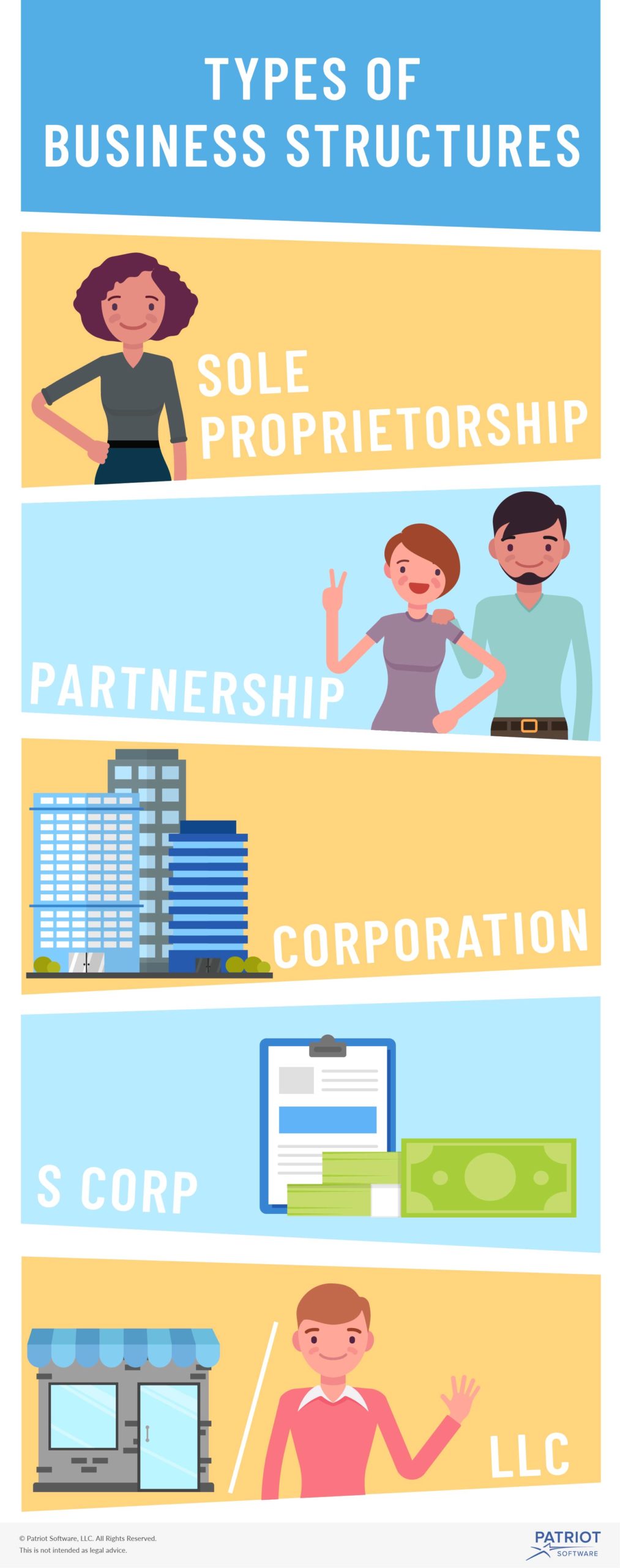
Types of business structures
The type of business structure you choose determines many components of your business, including day-to-day operations, how much you pay in taxes, and the paperwork you must file. You should choose a business structure that gives you the right balance of benefits and protection.
Each type of small business structure treats tax liability differently. Some businesses are taxed at the personal income level or are double-taxed at both the business and personal income levels. Read on to learn the various types of business structures to see which is the best fit for your small business.
Sole proprietorship
The most common business structure type is a sole proprietorship. A sole proprietorship is owned and operated by one person, a sole proprietor. A sole proprietorship is a good option if you are looking to have complete control of your business.
Sole proprietorships do not produce a separate business entity. Your business assets and liabilities are not separate. Sole proprietors include both their business expenses and personal income on their personal tax returns.
Sole proprietors are liable for the business’s liabilities, debt, and losses. If your business goes into debt, your personal assets may be at risk.
Partnerships
A partnership is a business that two or more individuals own and operate together. Partnerships can be considered either general partnerships or limited partnerships.
General partnership
A general partnership is owned by two or more people. In general partnerships, the partners manage the business and assume responsibility for the partnership’s debts. Partners have equal shares of all profits and losses.
General partnerships allow partners to work as co-owners. Consider creating a partnership agreement to lay out the specific shares for each partner if you plan on starting a general partnership.
Profits in general partnerships are only taxed at the personal income level.
Limited partnership
A limited partnership has both general and limited partners. You need at least one general and one limited partner to start a limited partnership.
Limited partners only serve as investors for the business and typically have no business decision rights. General partners own and operate the business while assuming liabilities for the partnership. As a general partner, you have control and responsibility. Limited partners get ownership without taking on the responsibility and risks.
Corporation
A corporation, or C Corp, is separate from its owners. Laws treat corporations as independent legal entities.
Corporations provide you with the strongest protection from personal liability. However, corporations are more complicated than other business structures. A corporation structure is a good option if you plan to expand your business and add shareholders.
Corporations require extensive recordkeeping and reporting. You are required to comply with more regulations and tax requirements.
Corporations are double-taxed. Double taxation occurs when you pay income taxes twice on the same source of earned income. In the case of corporations, the company is taxed as a business entity and each shareholder’s personal income is taxed.
S corporation
An S corporation, or S Corp, is a type of corporation where profits and losses are passed through directly to the owner’s personal income without being subject to corporate tax rates.
Shareholders must be U.S. citizens. An S Corp can’t have more than 100 shareholders.
Only the owners, or shareholders, of the business are taxed. You can avoid double taxation by electing to operate as an S Corp through the IRS.
Limited liability company
A limited liability company (LLC) lets you take advantage of the sole proprietorship, corporation, and partnership business structures.
LLCs are flexible business structures. Your LLC separates business and personal liabilities. All owners have shared tax responsibilities.
An LLC provides you with liability protection, like corporations, without double taxation. Your business avoids double corporate taxation since you can pass through taxes to the personal income level.
Unlike other business structures, owners in LLCs are not liable for their business’s debts.
In many states, LLCs have a limited life. Your state may require you to dissolve or reform your LLC if someone joins or leaves. Each state treats LLCs differently, so tax liabilities vary depending on location. Check with your state for specific LLC regulations.
Choosing your business structure type
When selecting a business structure, be sure to choose the one that provides the most benefits and is the best structure for small business.
Consider these factors when choosing your business structure type:
Legal liability
Taxes
Cost
Flexibility
Your business’s future needs
After you decide on your business structure, check out your state’s website to set up and register your small business. Consider contacting a small business lawyer or professional to help you get started.
Once you set up your business structure, you need a reliable way to manage your books. Patriot’s accounting software allows you to easily track incoming and outgoing money. Try it for free today!
Dr. Maria Rogers is an Associate Professor in the School of Psychology at the University of Ottawa. Dr. Rogers holds a Ph.D. in School and Clinical-Child Psychology from the Ontario Institute for Studies in Education at the University of Toronto and completed her postdoctoral training at Toronto’s Hospital for Sick Children and McGill University.Dr. Rogers has broad interests in how adult-child relationships affect children’s learning and social-emotional development across various contexts. She has published extensively about the social-emotional and academic development of youth with ADHD across the childhood and adolescent period. Dr. Rogers is also interested in how community mental health agencies work with families and schools to meet the educational needs of vulnerable children and youth.
Dr. Rogers has received several federal and provincial awards and honours for her research, including grants from the Social Sciences and Humanities Research Council of Canada and Ontario’s Ministry of Research Innovation. She is also a Registered Psychologist with the College of Psychologists of Ontario and the Ordre des psychologues du Québec and has worked clinically with children, teachers, and families in several school districts, clinics, and hospitals in Ontario and Québec. Dr. Rogers is also a member of the NunatuKavut community of Southern Labrador and currently works with Indigenous youth in both urban and rural settings near Ottawa.
Past Chair: Laurie Ford, Ph.D.
Director of Early Childhood Education Director of Training, UBC School and Applied Child Psychology Program Department of Educational and Counselling Psychology, and Special Education University of British Columbia
Laurie is on faculty at UBC where she is currently the Director of Training for the Ph.D. Program in School and Applied Child Psychology and Director of the Early Childhood Education program. Her early professional background is in psychology and special education and she worked as a special educator, school psychologist, and pediatric psychologist before becoming an academic. She received a Ph.D. in School Psychology with a minor in Child Clinical Psychology from the University of Kansas (APA accredited), and completed her internship with the Nebraska Consortium in Professional Psychology (APA accredited) and a doctoral fellowship at the University of Nebraska Medical Center in Pediatric Psychology. Prior to her move to Canada, Laurie was on faculty at Texas A & M University and the University of South Carolina. Her research and teaching have a strong focus on the ecological context of children and youth, diversity, cross-disciplinary work, and the importance of relationships in a wide array of contexts. She has particular interest in the assessment of young children, community-based services, and family-school-community relationships, especially the supporting newcomer families in Canada. An active participant in work and committees with CPA in recent years, she has served on the CPA Accreditation Panel and is currently an elected member of the CPA Board as Chair of the Council of Sections and a member of the Knowledge Sharing Group. Laurie looks forward to continued work with others in the ESP section to engage more and diverse school and educational professionals from across Canada in our section to make sure the strongest section we can be. When she is not working she enjoys spending time with friends outdoors in beautiful British Columbia, sitting in the sun (when they have it), cooking, gardening, good cider and wine, and hanging with her dogs Cooper and Gracie Belle.
Chair Elect: Maria Kokai, Ph.D., C. Psych.
Private Practice Toronto, Ontario
Dr. Maria Kokai is a registered psychologist with over 35 years of experience that includes work in school board and private practice settings. She obtained specialized experience in Scandinavia related to psychological services for deaf and hard of hearing children. She earned her PhD at the E. Lorand University in Budapest, Hungary, and has been practicing in the field of school psychology (initially in Europe, then in Canada) since 1980. As a school psychologist, she worked with a wide range of populations, including students with LD, Giftedness, as well as deaf and hard of hearing students. She was the Chief Psychologist at the Toronto Catholic District School Board for 14 years, overseeing and directing psychological services for the 90,000 students of this board, as well as participating in the selection, implementation and evaluation of various system-wide intervention programs in the areas of LD, resilience and mental health. She supported and facilitated collaboration in research, service delivery and training with other organizations (e.g. SickKids Hospital LD Research Program, Integra, Learning Disabilities Association of Ontario – LDAO, Psychology Foundation of Canada, Ontario Institute for Studies in Education, Friends Resilience), and helped establish and obtain CPA accreditation for the Toronto Area Residency Program with rotations in school psychology. She is a former member of the Board of Directors of the Ontario Psychological Association and the Psychology Foundation of Canada, and the former President of the Association of Chief Psychologists with Ontario School Boards. She is a current advisory member of the LDAO’s LD@School project, as well as a member of the Ontario Psychological Association’s Section on Psychology in Education Council. She is co-chair of the Cross-sectoral Psychology Working Group creating Guidelines for Diagnosis and Assessment of Children, Adolescents and Adults with Learning Disabilities. Consensus Statement and Supporting Documents (currently available as a CPA CE workshop).
Secretary/Treasurer: Steven Shaw, Ph.D.
McGill University School and Applied Child Psychology Program Department of Educational and Counselling Psychology
Steven R. Shaw has been a school psychologist for 30 years after graduating from the University of Florida (MEd/EdS 1988; PhD 1991). The first 16 years were in service to children and families through clinical practice. He worked in schools, hospitals, and private practice. For 9 years, Steve was the lead psychologist at The Children’s Hospital in Greenville, SC, US. While there, he learned complex clinical skills (e.g., neonatal intensive care unit follow up, diagnosing rare genetic disorders, pain management for children with sickle cell anemia, neuropsychological assessment for children undergoing CNS radiation), financial management of a large department, supervision of professional staff, and development of internship and residency programs. He has received awards for his work in decreasing minority overrepresentation in special education in South Carolina and efforts to eliminate corporal punishment in schools in Florida. The second 14 years have been as a staff member at McGill University. For 7 years he was program director of the School and Applied Child Psychology program and Counselling Psychology programs. His research involves building skills for students with intellectual disabilities and narrowing the gap between research and clinical practice. Steve has published 84 refereed articles and book chapters, presented or authored over 245 other articles and reviews, provided over 100 workshops to teachers and other professionals, edited four books, and authored one book. He is on the editorial board of 7 international professional journals. He is former editor of School Psychology Forum and current editor of the Canadian Journal of School Psychology. He has served as an CPA program accreditation site visitor. His professional focus continues to be on expanding the capability of educational and school psychologists to provide mental health and academic supports to all students in Canada.
Member at Large: Adam McCrimmon, Ph.D., R.Psych.
Director, Autism Spectrum Education, Research, and Training (ASERT) School and Applied Cdild Psychology, Werklund School of Education University of Calgary
Adam completed his undergraduate degree at the University of Calgary and his M.A. in Clinical-Developmental Psychology at York University. He then went back home to Calgary to complete his doctorate in School and Applied Child Psychology. A Registered Psychologist in Alberta since 2010, Adam has focused his research and clinical work on Autism Spectrum Disorder (ASD). He currently directs the Autism Spectrum Education, Research, and Training (ASERT) lab at the University of Calgary where he oversees research on ASD and trains students in assessment of and intervention for individuals with ASD. He is a Certified Trainer for the ADOS-2 and ADI-R, considered “gold-standard” measures in the assessment of ASD and regularly conducts trainings to clinicians and researchers interested in using these measures. He was elected as a Member-at-Large of the School and Educational Psychology section of CPA in 2013 and also serves as an Associate Editor of the Canadian Journal of School Psychology. He is the father of two young boys and enjoys spending time with them and his family.
Member at Large: Debra Lean, Ph.D.
School and Clinical Psychologist Chief Psychologist, Dufferin-Peel Catholic District School Board
Dr. Debra Lean is a School and Clinical Psychologist with over 30 years of experience in school boards and hospital mental health departments, as well as private practice. She received her Master’s and Doctorate in Clinical Psychology from Concordia University in Montreal. Dr. Lean has been registered with the College of Psychologists of Ontario since 1988, and serves periodically as an examiner for the College’s oral exams. She is the Chief Psychologist of the Dufferin-Peel Catholic District School Board, in the Greater Toronto Area, since 2002. Dr. Lean provided school psychology services for the Board for 13 years previous to her appointment as Chief. She has been the Chair of the Ontario Psychological Association’s Section on Psychology in Education since 2011 and is a member of the Editorial Board of the Canadian Journal of School Psychology. Dr. Lean is the co-author of two books on integrating school-based mental health services, Barriers to Learning: The Case for Integrated Mental Health Services in Schools (2010) and School-based Mental Health: A Framework for Intervention (2013). Her previous research activities include school-based mental health service models, a play-based mental health prevention program for primary age children with school adjustment difficulties, cognitive behavioral intervention for anxious students, and currently, alternative school psychology delivery models.
Member at Large: Erica Makarenko, Psy.D., R.Psych.
Director, Integrated Services in Education (ISE) Clinic Senior Instructor, School & Applied Child Psychology Werklund School of Education University of Calgary
Erica Makarenko grew up in southern New Jersey and completed her BSc degree in Psychology from St. Joseph’s University in Philadelphia. She completed an MA degree in School Psychology and an Educational Specialist (EdS) degree from Rowan University in New Jersey. She completed her PsyD degree from the Philadelphia College of Osteopathic Medicine in 2012 with a specialization in School Neuropsychology. Before moving to Canada, Erica worked as a School Psychologist in New Jersey, Pennsylvania, and Delaware. Erica came to the University of Calgary in 2012 to complete a postdoctoral fellowship in School Neuropsychology with the Werklund School of Education. Upon completing her postdoc in 2013, Erica continued to teach in the School & Applied Child Psychology program as an instructor. From 2013 until 2016, Erica worked as the Director of Instructional Impact for the James Chaput Centre for Educational Research Applications in Calgary, where she collaborated with a team of professionals to develop and pilot 21st century learning tools and academic programming. In 2016, Erica joined the Werklund School of Education at the University of Calgary as an Instructor and the Academic Coordinator of both the Master of Education in School & Applied Child Psychology program and the Master of Counselling program. Erica has been the Co-Academic Coordinator of the graduate certificate program in Educational Neuroscience: Applications for Teaching & Learning. In 2018, Erica assumed the role of Director of the Integrated Services in Education (ISE) Training Clinic at the University of Calgary, the outward-facing training facility for graduate students in Educational Psychology. Since 2017, Erica has served on the School Psychology Subcommittee of the Psychological Association of Alberta, is a Registered Psychologist in Alberta, and a Nationally Certified School Psychologist in the United States. She is married and lives in Calgary.
Student Representative: Tasmia Hai, Ph.D. Student
School and Clinical Child Psychology Program University of Alberta
Tasmia is entering her third year of doctoral studies in the School and Clinical Child Psychology at the University of Alberta. She previously completed her Masters at the University of Calgary in the School and Applied Child Psychology Program and an Honours Bachelors of Science in Human Biology and Psychology at the University of Toronto. Her research interests lie in understanding the behavioural and neurobiological underpinnings of ADHD. In the future, she hopes to work as a school/clinical psychologist in Ontario and advocate for school-based mental health, especially for new immigrant and ELL students.
Student Representative: Alexandra Ruddy, Ph.D. Student
School and Applied Child Psychology Program University of British Columbia
Alexandra is a second year PhD student in the School and Applied Child Psychology program at the University of British Columbia. She grew up in Ottawa and graduated from Queen’s University with a BA in Psychology. At Queen’s, she completed an Honours thesis in her final year that examined the relationship between adolescent depressive symptoms, risk-taking frequency and perception, and emotion regulation difficulties. Following her undergraduate degree, she completed a Master’s degree in Child Development at University College London. Her dissertation examined how socioeconomic disadvantage, parenting, and household chaos contributed to the developmental trajectories of emotional and behavioural problems of children with ADHD. Together, her previous education, research, and work in schools led her to pursue the MA in School Psychology at UBC. Her MA thesis, titled Secondary School Students’ Perceptions and Experiences of School Mental Health Climate, involved semi-structured interviews with high school students to explore the mental health climate of secondary schools in the Lower Mainland. She intends to continue her research in the area of school-based mental health as she continues her studies in the SACP doctoral program. Her main research interests involve youth and school-based mental health, including the mental health climates of high schools.
Student Representative Paige Walker, M.A. Student
Paige Walker is a second-year MA School Psychology student at Mount Saint Vincent University in Halifax, Nova Scotia. She grew up in London, Ontario, where she completed her undergraduate degree in psychology at Western University. Her Master’s research aims to understand how students with various mental disorders perceive, experience, and navigate post-secondary education. Specifically, Paige is interested in exploring factors impacting access to Accessibility Services and accommodations for students with mental disorders. More broadly, Paige is interested in understanding what barriers these students face during their post-secondary education. She is passionate about supporting students and recognizes the importance of listening to student voices and using this data to inform policies and practices. Outside of the classroom, Paige enjoys hiking, biking, swimming, and spending time with family and friends.
Courier services are ready to play a central role in the daily operation of any business. Especially businesses that pride themselves on exceeding customer expectations regarding product delivery, documentation and so on.
Businesses rely on postal services around the world, unfortunately, some of them may not be equal regarding faster delivery times and sufficient security in the packages, parcels and documents may be questionable. To this end, some courier services are available to those companies and individuals seeking personalized service and specialized related to the provision or collection of these items.
Courier services and courier companies considered masters in logistics and logistics management, and even more when their respective systems and software are up to date to promote the effective and efficient delivery or pickup of packages and/or documentation. The use of these systems through a courier can be used in the monitoring feature of all shipments to the customer or the collections of the company or the client itself to determine exactly when delivery or collection is and is particularly useful to the company called the chain of e-value services.
When choosing a courier service for your business or individual needs some additional factors that may be necessary to take into account, as with any service provider or supplier, the companies will represent your company very services they provide. Proper care in selecting such a supplier is of paramount importance to ensure that they will benefit your business at heart during delivery or collections, and according to your needs and specifications.
Will surely come to appreciate that most of the rates of all levels, and regarding services are very similar, which we dig a little late on the reputation of the courier company, duration of operation and maximum reliability of the company. Having mentioned taxes is likely to find that the contractual rates are reduced slightly and are certainly worth considering, but it is worth mentioning that only after the trust and business have been established should be aware of any contractual agreement itself.
Again, as with any business or service that requires such contracts to start, you must check all the details, if necessary to avoid unpleasant surprises if you wish to terminate the agreement with mail from the company.
Therefore, choosing a suitable company which will take possession of their role as a key player within your company as a supplier and as such requires special attention to the details of their capabilities and reliability. This can be established by examining the courier company and the potential execution of some so-called test-run to assess their ability to meet your demanding needs. You should also consider checking if the business is BBB-accredited.
Tips to Find a Cheap Business Delivery Service
There is a time when every business and a private person feel the need to send a parcel to someone else. That somebody could be a family member who is staying at a distant land or a customer or even a buyer. Whether you are involved in the process of selling products to another person or a company, you need to avail the package delivery services.
If you have been looking out for Arrowmail Courier Service then you need to check out the below-mentioned pointers that will guide you properly.
One of the easiest ways to reduce the overall package delivery service cost is utilizing booking the services online. When it comes to hiring the courier services for the collection and delivery of a parcel, you should search online where you will get plenty of parcel delivery service providers who are ready to assist you.
Find out the list of comparison sites where you can compare the prices. This will help you to select the one that gives you better prices. Why would you otherwise spend more money on similar services that any other firm can offer you with and that too within your budget rate? The more you spend your time researching the comparison sites, the better it will be for you.
If you have been looking out for a cheap courier service provider then you should search online where you will get the advantage of securing the best prices and services. Getting value for money is considered to be essential, and the comparison sites will save you a lot of money, time and energy. Moreover, every comparison site comes along with a different set of services. You need to identify your kind of parcel from the list mentioned on the site and the amount of money that you have to pay will be put right before your eyes.
There are several delivery options available on the internet. All you need to find out the cheap couriers that will give you a list of the cheap couriers which are aimed at providing you with a vast array of affordable delivery options. Whether you have been sending your parcel nationally or internationally, you would need to find out right from the given list. The best advantage of reducing your overall cheap courier to India service is the fact that the longer it takes to deliver the product, the more affordable would be the level of cost. If you are not choosing a strict time frame for the product to be collected and delivered then you can save a whole lot of money considerably.
Benefits of Using Courier Services
Here are some of the properties of courier service providers and logistics providers (if you own a business) you should look at:
International service provision- You might come across courier service providers who provide you with domestic courier service and some which offer you with local and international. It is a good idea to go with the latter ones. International provision shows that these courier service providers have a greater reach and have a higher mobility and experience.
Import and export procedure guidance- If you want your business to work well, then it is important to make sure that you look for logistics companies in Pune as they help you with the import and export procedures as well. This means that they provide door-to-door delivery and supplement it with international documentation procedures, insurance, storage, warehousing and custom advice.
Mobility across all modes of transport- Choose a provider which has a thorough knowledge of transportation in air, rail, road and sea. For quick, fast and urgent deliveries we need to rely on flights. The goods which could be transported are perishable items such as agricultural products. Roadways are inefficient due to the longer time, high traffic and the bad quality of roads in our country. However since the railway is no good, roadways are used the majority of the times. You should choose the mode depending on your requirement. Further for international transportation, ship and air are the only two methods available. Hence it is a good idea to choose a provider who offers their service across all modes.
Provision for safety-Imagine that you have a business which requires certain gases and acids. They could be flammable and hence come under the gamut of dangerous goods. A service provider should also provide services when it comes to such products as they are sometimes necessary for some businesses. The service provider in such cases makes sure to handle them with care, and also transport them legally with all papers approved from the required agencies. This shows that the provider is cautious and it makes all the provision and keeps away from disaster.
On time delivery- For certain goods like fruits and vegetables, if they are not delivered on time, then they cannot be consumed. Hence for such products, on-time delivery is essential. You can also go in for a fast courier service for such goods. Sometimes, the customer wants the goods to be on time as throughout the process they worry and stress about whether the goods are delivered safely. To save them from such trouble, courier companies these days offer tracking services where a customer can find out where the good is and what date and time it will reach.
Arrowmail Courier Services
1409 East Blvd,
Charlotte, NC 28203